Swing Breakout Sequence: How to Study the SBS Trading Pattern
Learn the five-part SBS sequence, why the sweep alone is incomplete, and how to review the pattern within the larger range.
3 min read
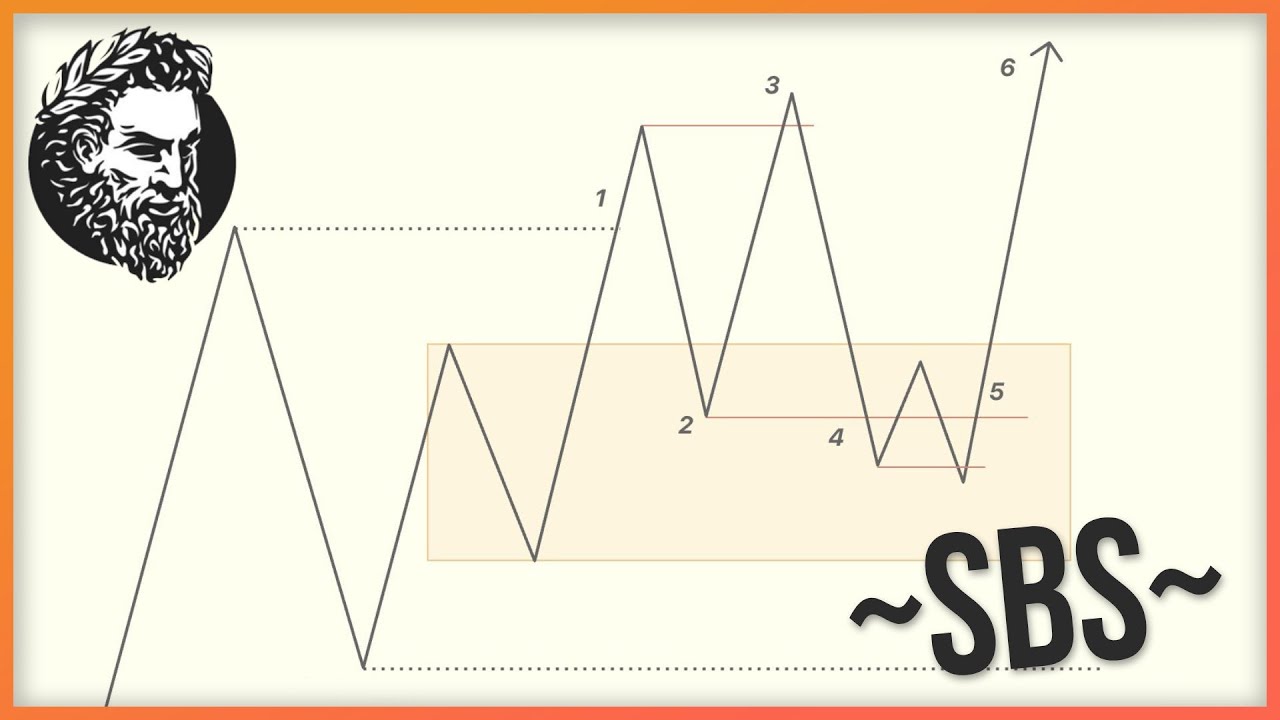
The Swing Breakout Sequence, or SBS, follows a breakout, a first pullback, a renewed push, a sweep of that pullback and a reversal response. The useful distinction is between noticing the sequence developing and having permission to enter.
In the June 2024 lesson, Stoic Trader repeatedly warns against forcing the sequence onto price. The market can continue from an earlier stage or fail to produce the final response. Keep the unfinished examples in your review.
Read the five stages in order
For the bullish version discussed in the recording:
- Price breaks beyond the initial swing area.
- The first pullback forms inside the developing sequence.
- Price pushes back toward the high, ideally making a new high in the example.
- The return move sweeps the low of that first pullback.
- Price shows the reversal response after the sweep.
The bearish version reverses the direction. The recording discusses several potential trades within the sequence, but its main fifth-stage entry waits for a reversal after the fourth-stage sweep.
Why stage four is not the finished setup
One sweep tells you that a previous extreme has been breached. It does not tell you the reversal is complete. Price can continue through that level.
In the lesson, the fifth stage may appear as a double-bottom or double-top style reversal, followed by an entry trigger. The demonstration discusses a stop-entry order once that response becomes identifiable. Watch the chart section to reproduce the trigger and invalidation rather than treating the five numbers as sufficient instructions.
If you enter at the sweep itself, label it as a different entry version. Otherwise your review will mix anticipatory entries with entries that waited for confirmation.
Place SBS inside the parent range
SBS is an optional execution application. The Stoic Range Model remains the foundation for identifying the larger environment.
Record whether the pattern is forming near a parent boundary, within the middle of a range, or after a break outside it. Similar shapes can leave very different amounts of room to an objective. Seeing all five stages does not automatically make the available risk and reward acceptable.
For a sweep-and-held-retest setup inside the parent range, use its midpoint and opposite boundary as reference objectives. For a break-and-held-retest setup outside it, study one and two range-height projections. Keep any target from the historical SBS version explicitly labeled in your notes.
Define the risk before the trigger
Write the exact condition that would invalidate your fifth-stage entry. Calculate the size from that distance and the loss limit in your plan. Do not move invalidation farther away simply because the sequence still looks attractive.
Also define when you will cancel the idea. The reversal may never form, the move may leave without an entry, or the available target may become too close. Each is a legitimate review outcome.
Use a sequence log
For every candidate example, save the date, market, timeframe, parent range, stages visible before entry, trigger, invalidation and result after costs. Add a field for “unfinished sequence.” This prevents your study from quietly excluding the cases that never reached stage five.
The full SBS lesson explains the original pattern. Compare it with the market-structure guide when the same chart seems to show several competing swing sequences. Choose the sequence your written rules identify before revealing the outcome.
Stoic Edge provides education. Historical examples and practice exercises do not establish future performance.
Watch the source videos
Study the original demonstrations alongside this guide. Recording dates and historical context appear on each video page.
Put the Lesson Into Practice
Study the course, keep notes and review trades in Stoic Journal beta, and learn alongside the Stoic Traders community.
Compare monthly and yearly course access before joining on Skool. Compass is included while monthly membership is active; yearly Premium includes lifetime course and Compass access. You can also get Stoic Edge Compass separately.
